Reset Progress
Share Achievement

Subnetting
Learn subnet masks, CIDR notation, and subnet calculation basics.
Task 1: Introduction
Subnetting is one of the most important skills in networking. It's how large networks are divided into smaller, organized pieces. Think of it like organizing a big office building into separate departments-each department has its own space, resources, and security.
In this room, you'll learn the fundamentals of subnetting in a simple, step-by-step way. We'll start with what you already know about IP addresses and build up to planning a network for a small business. While subnetting can seem challenging at first, with clear explanations and practice, you'll understand how it works.
Why Subnetting Matters
Subnetting isn't just theory-it's used in every network:
- Efficiency: Prevents IP address waste by creating right-sized networks
- Performance: Reduces network congestion by limiting broadcast traffic
- Security: Allows you to isolate network segments from each other
- Organization: Makes large networks easier to manage and troubleshoot
What You'll Learn
By the end of this room, you will understand:
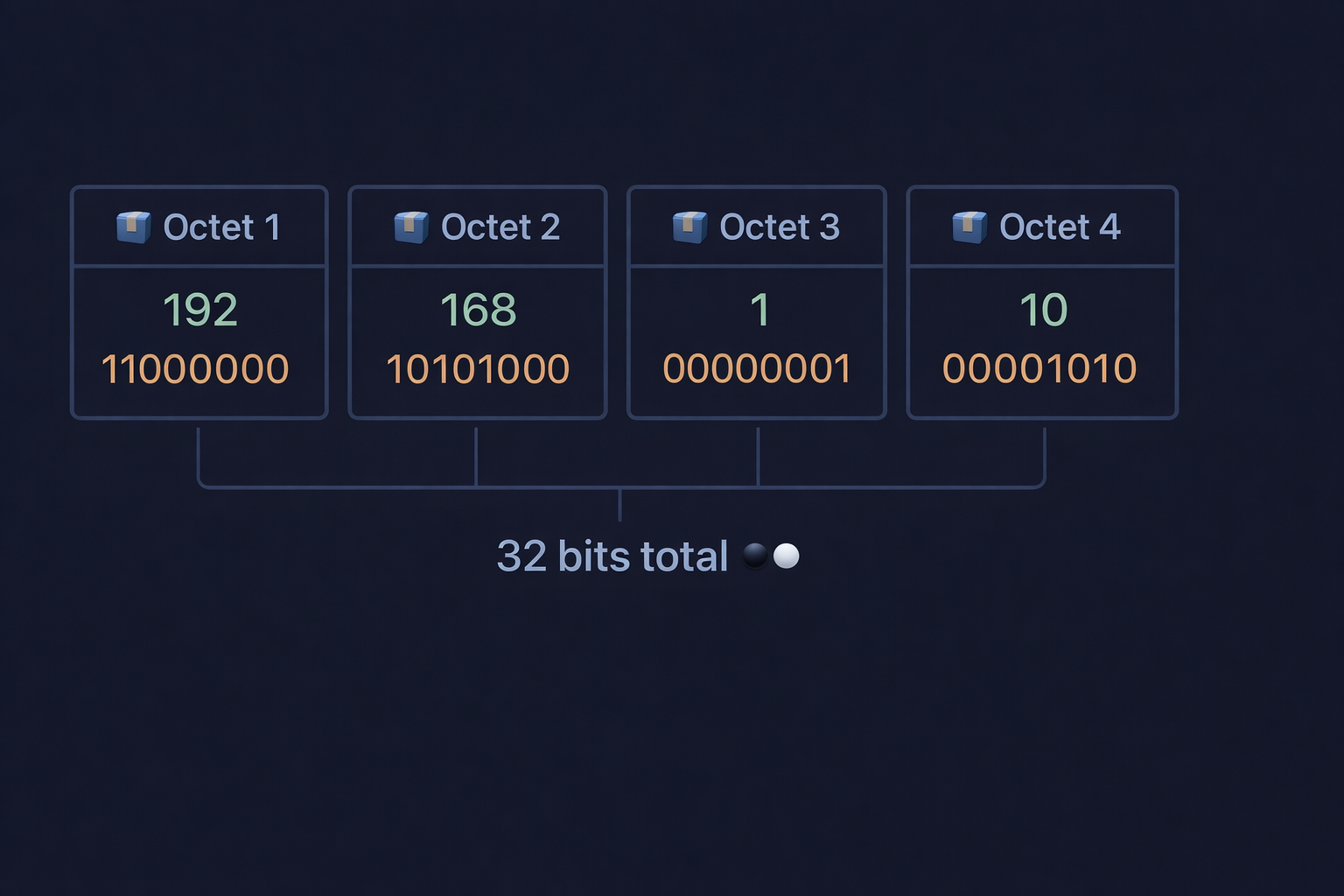
- How IP addresses are structured for subnetting
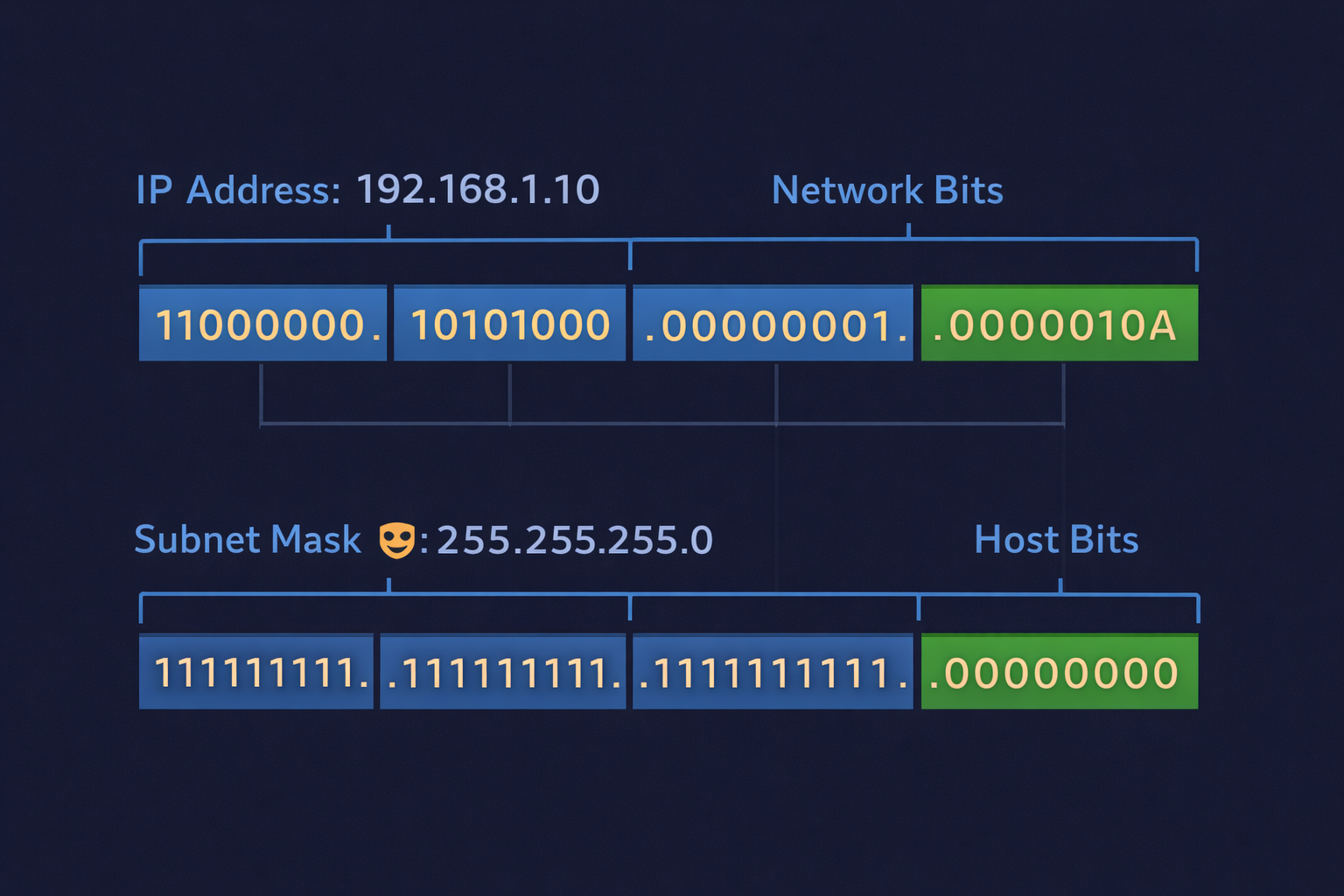
- What subnet masks are and how to read them
- Modern CIDR notation (like /24 or /26)
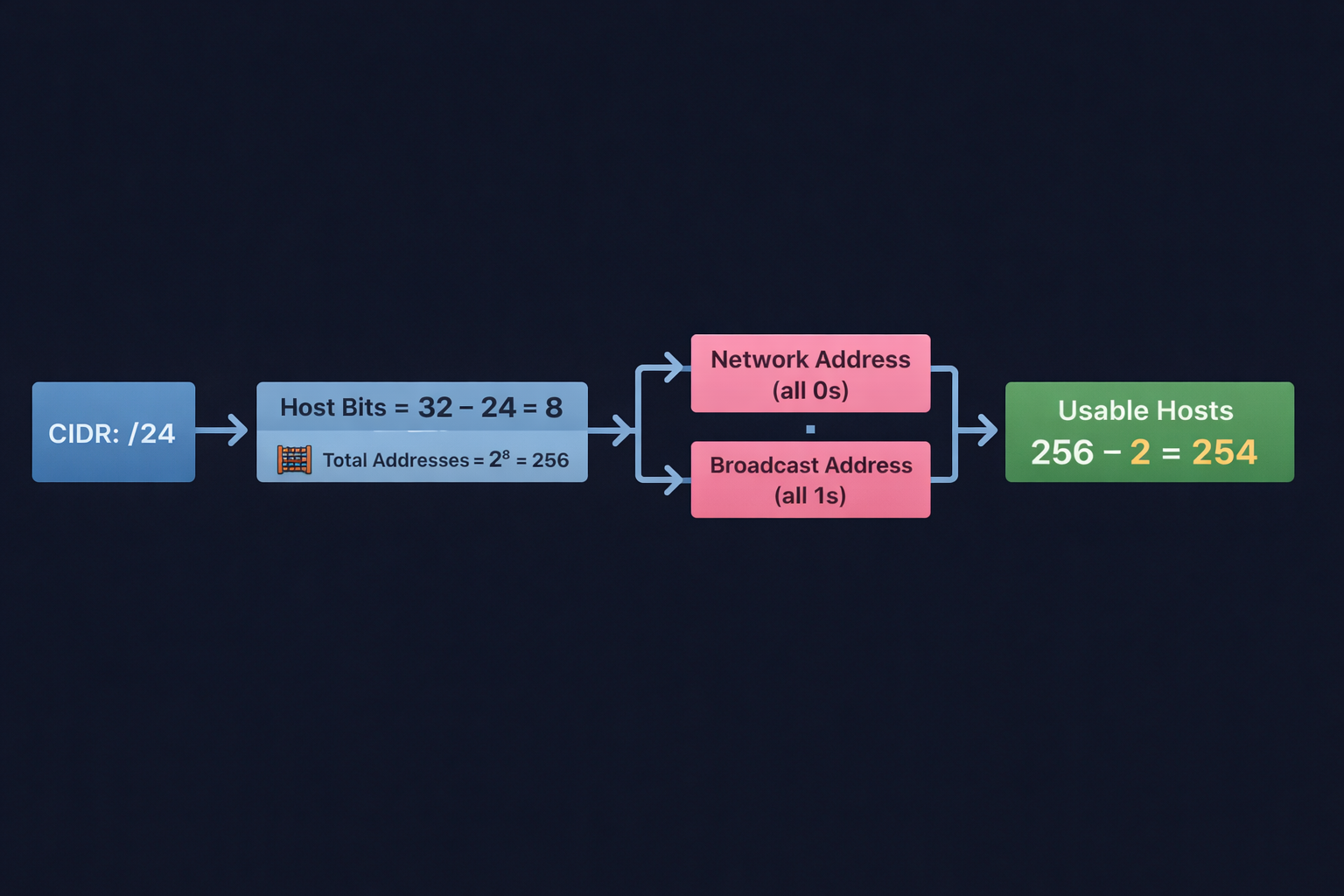
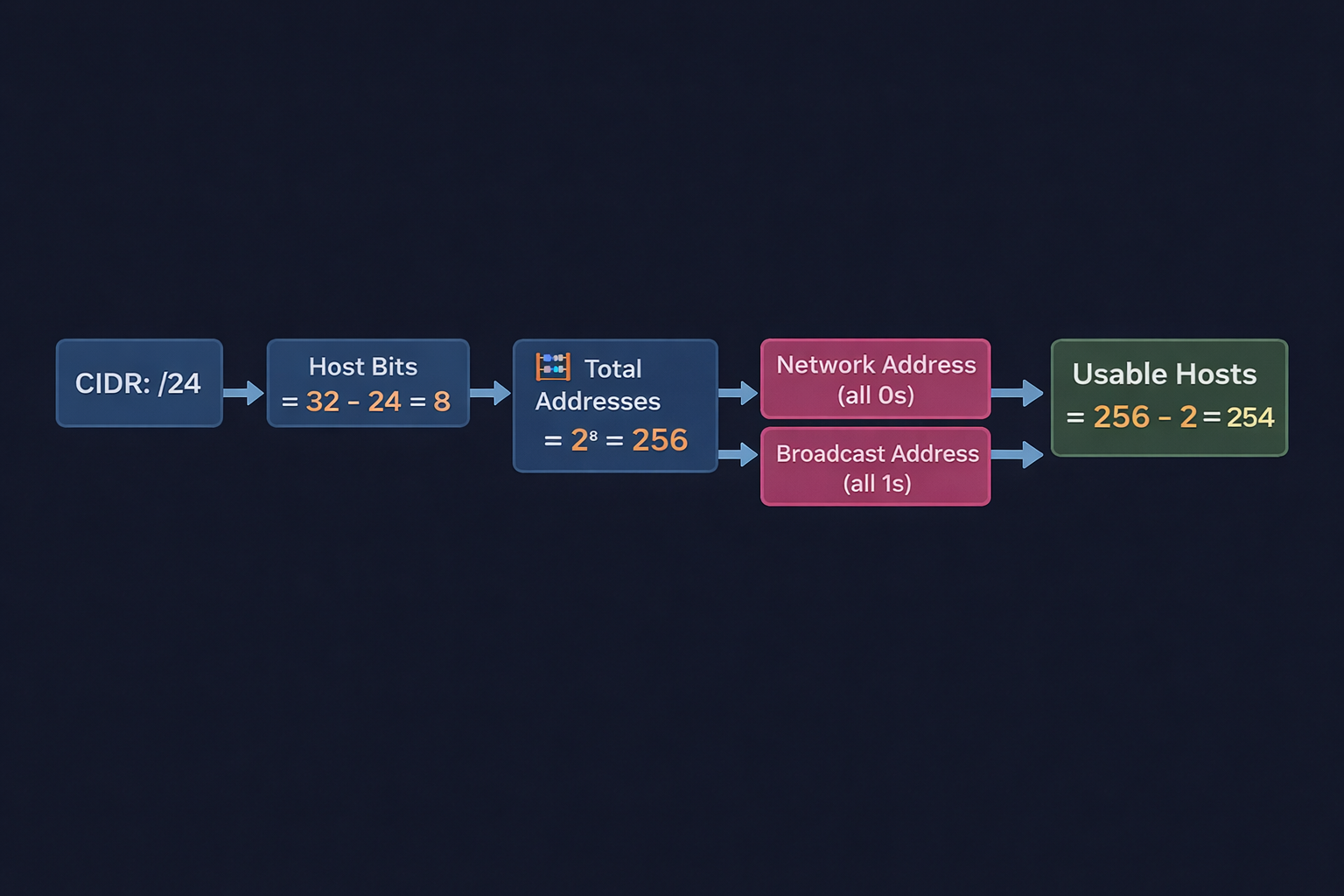
- How to calculate the number of hosts in a subnet
- How to apply subnetting to a real-world scenario
Prerequisites
Before starting, you should already be familiar with:
- Basic IP addressing (IPv4 format)
- The difference between network and host
- Simple binary concepts (bits and bytes)
- Basic networking terminology
How to Approach This Room
- Take it slow: Subnetting builds on each concept
- Practice the examples: Try calculations yourself
- Use the visualizations: They help make abstract concepts concrete
- Don't worry about memorizing: Focus on understanding the principles
Note
Subnetting is a challenging topic for many beginners. If something doesn't click immediately, that's normal! Re-read the explanations, work through the examples, and use the visual demonstrations. You'll get it.
Optional Video
This optional video covers the fundamental concepts of subnetting. It's helpful but not required to complete the room.
Knowledge Check
Q1: Type "yes" and submit to complete this task.

CYBRIXEN Assistant
How can I help you today?
Welcome to CYBRIXEN Assistant
Click on any question above to see the detailed answer here.
Contact Support Team
We'll respond to your email within 24 hours